Late Afternoon Tension Near 5th and Trinity: What Austin Residents Need to Know About the Convention Center Lawsuit
It’s just past 5 p.m. on a weekday at the busy intersection of 5th Street and Trinity Street in downtown Austin. Commuters inch forward in traffic, many anxiously glancing at their watches, hoping to beat the rush hour gridlock. Construction crews nearby continue their work on what will soon be a massive expansion of the Austin Convention Center, a project set to reshape the skyline and traffic flow around the Warehouse District and parts of Downtown Austin. For many, this is a daily scene—one that could soon bring even more disruption, and not just from construction noise.
What Just Happened: Court Decision Clears Way for Convention Center Expansion
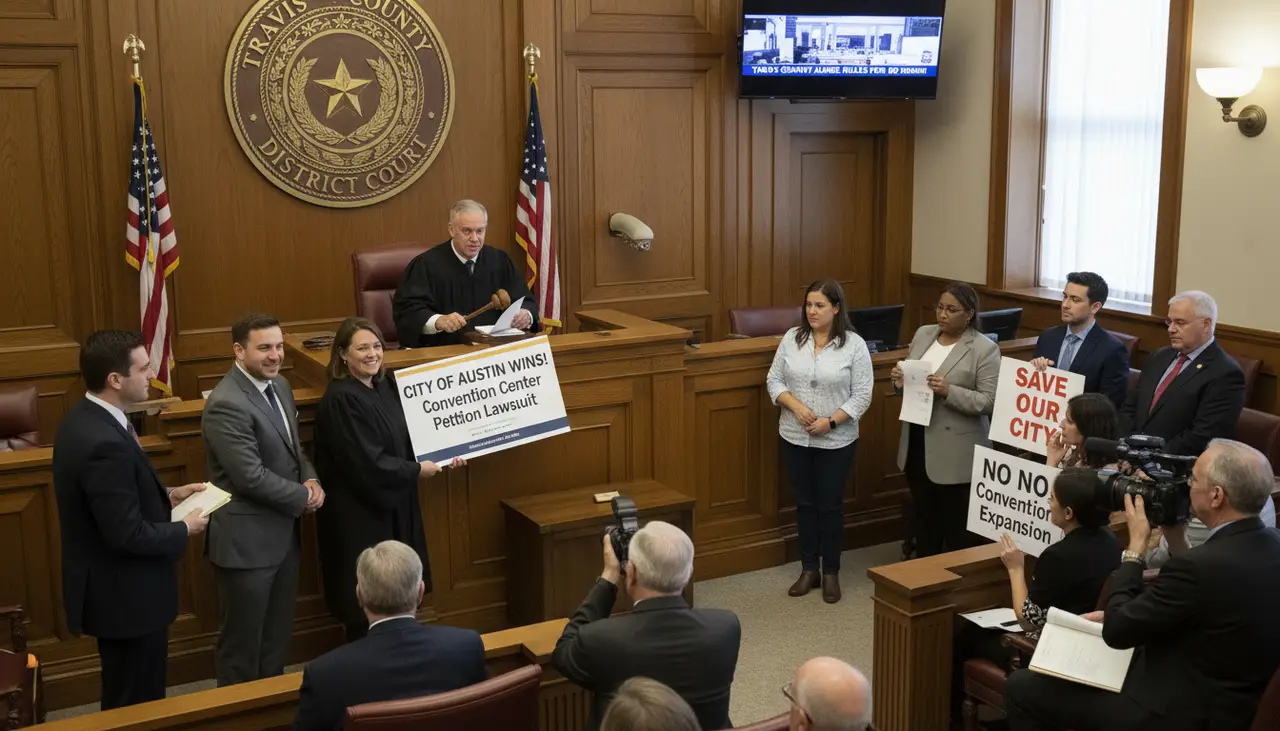
On Monday, Travis County Judge Jessica Mangrum ruled decisively in favor of the City of Austin in a lawsuit filed by Austin United PAC, a local political action committee. The PAC challenged the City Clerk Erika Brady’s rejection of their petition aiming to halt the $5.6 billion expansion of the Austin Convention Center. The PAC argued that their petition contained more than the required 20,000 valid signatures, but the City’s decision—based on a statistical sampling method—found otherwise.
The lawsuit’s defeat means the City can continue moving forward with the project, financed through a 32-year loan, without putting the issue to a public vote. Completion is scheduled for late 2028, and the ruling removes a major legal obstacle that could have delayed construction.
Mayor Kirk Watson released a statement supporting the ruling, emphasizing the project's importance to Austin’s tourism industry. Meanwhile, Austin United PAC insists it will gather new signatures to try to place the issue on the November ballot.
Why This Matters to You—Traffic, Taxes, and Your Neighborhood
If you live in or commute through the Downtown area, East Austin, or the Warehouse District, this ruling affects you directly. The convention center expansion will bring more traffic congestion, especially around 4th, 5th, and Trinity Streets, where construction will intensify over the next several years. Peak travel times could stretch longer as lanes are narrowed or closed for construction staging.
Residents on the East Side and neighborhoods like Holly and Hancock should prepare for increased noise and dust, which can impact air quality and daily routines. For households within walking distance, the project’s financing could translate into higher property taxes or fees to cover the City’s 32-year loan commitment.
Businesses near the Convention Center, including those on Red River Street and Cesar Chavez Street, will face disruptions that could affect deliveries, customer access, and operating hours. These changes will also ripple out to public transportation routes, potentially increasing commute times and stress for workers and families.
Ignoring these realities isn’t an option. Delays caused by unpreparedness can mean lost income, missed appointments, or worse—safety hazards from increased heavy equipment and altered pedestrian paths.
If You Are Affected: What You Need to Do Now
- Monitor construction updates from the City of Austin’s official website and local news outlets to stay informed about road closures or detours near 4th, 5th, Trinity, and Red River Streets.
- Plan alternative routes for your daily commute, especially if you travel through the Warehouse District or Downtown Austin during rush hours.
- Track your property tax statements closely. Increased city debt service could affect your bills starting in the next fiscal year.
- Attend upcoming City Council meetings or community forums in neighborhoods like Holly or Hancock to voice concerns or seek clarifications.
- If you signed or intend to sign any petitions related to this project, verify your voter registration status and signature validity to avoid disqualification.
- Keep records of any disruptions or damages to your property or business caused by construction activities.
- Communicate with your neighbors and local representatives to organize collective responses or requests for mitigation measures.
When You Need Professional Help
This project’s scale means DIY solutions won’t be enough in many cases. You need to contact professionals when:
- Legal Help: If you believe your rights as a voter or property owner are being violated—such as improper exclusion from petitions or disputes over property boundaries—you must consult a lawyer experienced in local government and election law immediately.
- Contractors and Planners: Homeowners or business owners near the construction zone should engage licensed contractors or urban planners to assess potential property damage or to plan for necessary renovations and compliance with new zoning changes.
- Repair Services: If construction causes damage to your property—such as cracks, water intrusion, or infrastructure failures—contact licensed repair specialists promptly to document and fix issues before they worsen.
Waiting too long to seek expert advice risks losing legal protections, missing deadlines for claims, or facing higher costs for repairs and adjustments.
Back to Austin: Why This Intersection Is a City-Wide Concern
Whether you live in the growing East Austin neighborhoods or work downtown, chances are you pass near the Convention Center expansion site regularly—on Red River Street heading to concerts at the Moody Theater, or on Cesar Chavez Street en route to the University of Texas campus. The project’s footprint touches multiple neighborhoods and major arteries, including 4th and 5th Streets, which are vital to Austin’s transportation network.
The outcome of this lawsuit and the ongoing construction will shape Austin’s urban landscape and public finances for decades. Residents, business owners, and commuters alike must prepare for the significant changes ahead, or face mounting risks—from lost time and money to compromised safety.
Where This Is Happening in Austin
The convention center expansion is centered around downtown Austin, primarily affecting the Warehouse District and nearby neighborhoods such as Holly and Hancock. Key streets involved include 4th Street, 5th Street, Trinity Street, Red River Street, and Cesar Chavez Street.
Locals traveling between East Austin and Downtown frequently use these corridors. The proximity to landmarks like the Austin Convention Center itself, the Moody Theater, and the University of Texas campus means that traffic patterns and pedestrian flows will see ongoing disruptions. Residents in nearby neighborhoods should anticipate construction noise and potential detours for years to come.