Early Morning Chaos on South I-35: 18-Wheeler Crash Narrows Lanes, Causes Hours of Delay
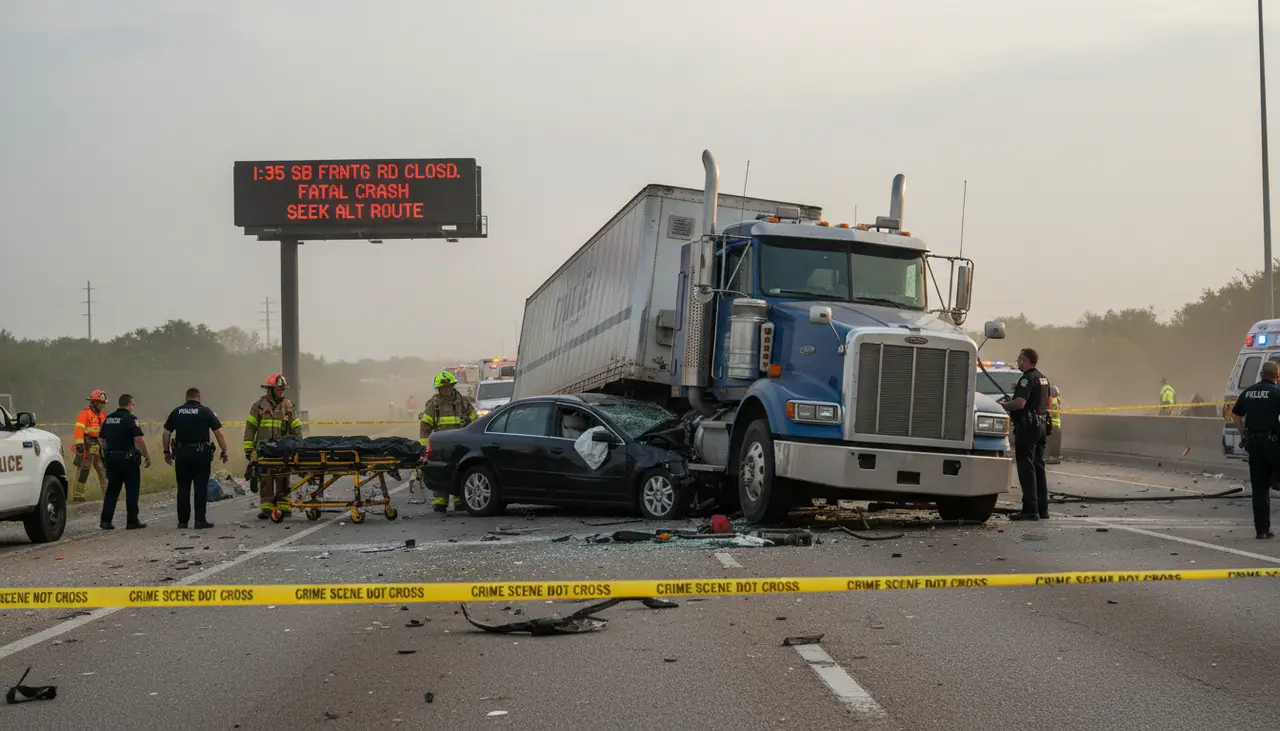
At 5:53 a.m. on Thursday, December 11, the usual hum of traffic along the 6600 block of South I-35 southbound between William Cannon and Slaughter was shattered by a major crash involving an 18-wheeler. Drivers heading through this busy stretch in the South Austin area found themselves trapped in a nightmare of slow-moving traffic and lane closures as emergency crews scrambled to manage the aftermath.
The crash caused a significant oil spill, forcing all southbound lanes on I-35 in this area to shut down except for a single lane. This partial closure lasted for several hours, with lanes finally reopening at 1:25 p.m. The incident snarled traffic for nearly eight hours during a critical part of the day, leaving commuters and freight haulers stuck in extended backups.
What Happened on South I-35?
The crash occurred in the 6600 block of South I-35 southbound, a stretch located between William Cannon Drive and Slaughter Lane, two key arteries in South Austin. An 18-wheeler was involved, and the collision resulted in an oil spill that complicated cleanup efforts and delayed reopening.
For hours, the southbound lanes were reduced to just one lane, creating a bottleneck that stretched for miles. Emergency responders and cleanup crews worked through the morning and early afternoon to clear the wreckage and contain the spill. By 1:25 p.m., all lanes were reopened, but the impact on traffic was significant throughout the day.
Why This Matters to Austin Residents
This crash is more than just an inconvenience—it’s a stark reminder of how vulnerable Austin’s traffic flow is along I-35, a critical corridor for commuters, freight, and emergency vehicles alike. When lanes close for hours, the ripple effects hit everyone:
- Safety risks: Drivers stuck in long backups face increased chances of secondary crashes, especially early in the morning when visibility is lower and driver alertness may be reduced.
- Lost time: Commuters and truck drivers alike lost hours navigating congestion that could have been avoided, increasing stress and reducing productivity.
- Financial costs: Delays on I-35 affect delivery schedules and employee arrival times, which can translate into lost wages and higher business expenses.
- Emergency response delays: Lane closures on such a busy highway can slow down first responders reaching other incidents, putting lives at risk.
For households depending on timely travel for work or childcare, these disruptions create cascading problems that stretch well beyond the highway itself.
If You’re Caught in a Crash or Delay on I-35: What to Do First
Being involved in or trapped by a crash on I-35 can be disorienting and stressful. Follow these steps to protect yourself and your household:
- Stay calm and pull over safely if you are involved in or witness a crash.
- Turn on your hazard lights to alert other drivers and prevent further collisions.
- Call 911 immediately to report the crash and any injuries.
- Avoid moving vehicles or spilled substances, such as oil, which can be slippery and hazardous.
- Exchange contact and insurance information if you are involved in the crash, but do not admit fault on the scene.
- Take photos of the scene, vehicle damages, and any road conditions that contributed to the crash.
- Once safe, notify your insurance company and document your experience carefully.
When Professional Help Becomes Necessary
There are clear points when handling the aftermath on your own isn’t enough. You need to contact professionals if:
- You suffer injuries or significant vehicle damage: Contact a personal injury lawyer to protect your rights and ensure fair compensation.
- Your vehicle or property requires repairs: Engage licensed contractors or auto repair services to assess and fix damages, especially if structural issues are involved.
- Your property or neighborhood is affected by hazardous spills: Environmental cleanup professionals should be involved to manage oil or chemical contamination safely.
- You need to adjust your travel or housing plans due to ongoing traffic disruptions: City planners or transportation consultants can provide guidance on alternate routes or accommodations.
Ignoring these needs can lead to prolonged safety risks, financial losses, and legal complications. Professional guidance is essential to navigate these complex situations effectively.
The Local Impact and Daily Reality for Austin Drivers
South I-35 between William Cannon and Slaughter is a vital stretch for thousands of Austinites every day. Whether you’re commuting to jobs in South Austin, transporting goods, or accessing nearby neighborhoods, disruptions here hit home quickly.
Extended lane closures like this one don’t just slow traffic—they create a domino effect that reverberates across the city’s road network. Residents who rely on this corridor must remain vigilant, plan for delays, and understand when incidents require more than patience—they demand immediate action and professional support.
Where This Is Happening in Austin
The crash occurred on the 6600 block of South I-35 southbound, a stretch situated between William Cannon Drive and Slaughter Lane. This area is part of South Austin, a region that connects residential neighborhoods with commercial hubs and serves as a major artery for freight traffic.
William Cannon and Slaughter are key east-west roads that many locals use to access shopping centers, schools, and workplaces. I-35 itself is the spine of Austin’s highway system, funneling thousands of vehicles daily through South Austin and beyond.
Drivers passing through this corridor often face heavy traffic, especially during morning and evening rush hours. Incidents like this 18-wheeler crash compound those pressures, turning a routine commute into a prolonged ordeal.