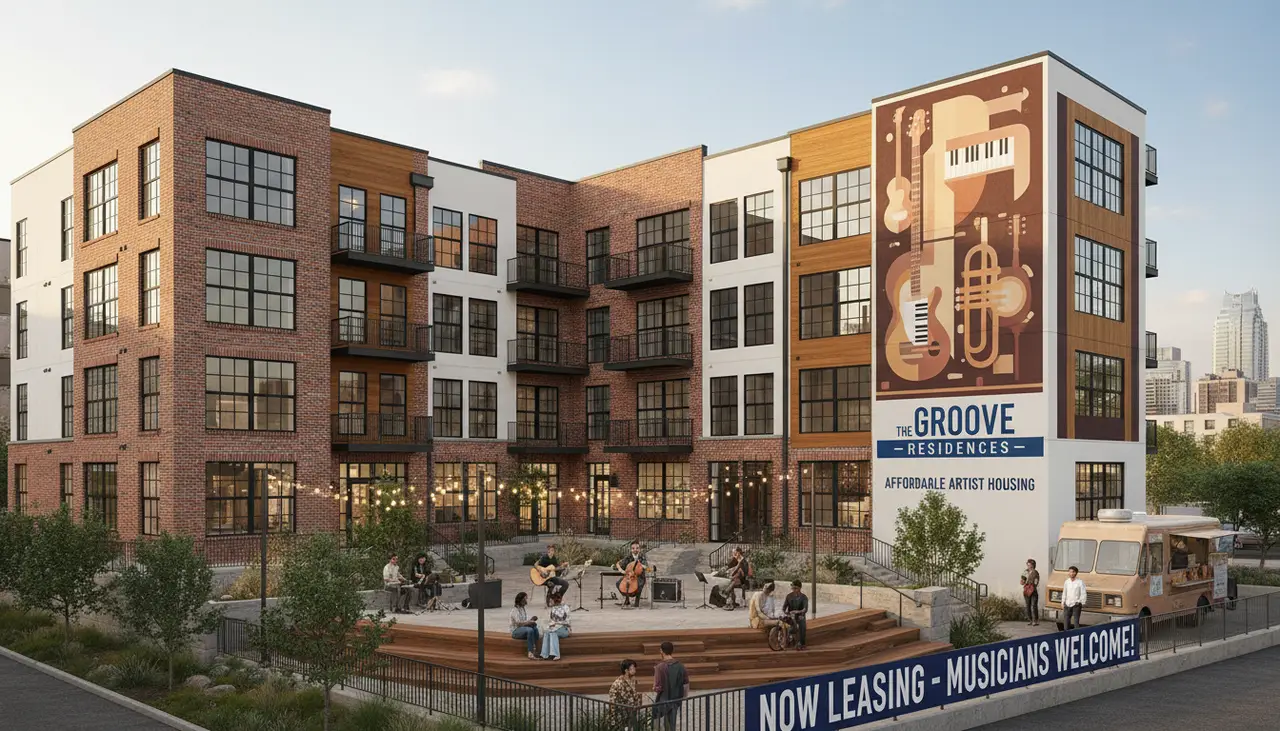
Austin Art Village Breaks Ground Near Chicon and 22nd Streets, Promising Affordable Housing for Musicians
It’s just after 7 a.m. on a chilly Thursday morning in East Austin’s Holly neighborhood. The intersection of Chicon Street and 22nd Street buzzes with the usual rush of commuters, delivery trucks, and cyclists weaving between cars. Amid the familiar hum, a small cluster of construction equipment stands quietly on a cleared lot, framed by aging bungalows and the distant silhouette of the Texas State Cemetery. This is the future site of Austin Art Village — a housing project designed specifically for local musicians and artists struggling to keep a roof over their heads.
The Blackland Community Development Corporation (Blackland CDC) is spearheading the project, aiming to build 10 small homes, each between 400 and 500 square feet, on this parcel at the heart of East Austin. Thor Harris, a longtime Austin musician and the vice president of Blackland CDC’s board, has been a vocal advocate for this initiative. The goal is not transitional housing but long-term affordable homes for creative professionals.
Construction partners were invited to submit proposals by February 6, following completed predevelopment steps including appraisals, surveys, and lot clearing. A demo home stands on site as a tangible preview of what’s to come. The project, estimated to cost around $2 million, already has $200,000 secured from St. David’s Foundation. Blackland CDC is now seeking additional funds from the City of Austin’s Rental Housing Development Assistance and Home Options for Mobility and Equity programs.
Homes will be reserved for households earning at or below 50% of Austin’s median family income — that’s $93,000 for a single person or $133,000 for a family of four as of 2025. Rent will be capped at 30% of household income, addressing one of the city’s most pressing issues: housing affordability.
Why Austin Art Village Matters to You
If you live or work in East Austin, this project is more than just a new development. It’s a response to a growing crisis that affects neighbors, local businesses, and the cultural fabric of the city. Musicians are a vital part of Austin’s identity, yet many face housing instability that threatens their ability to stay in the city. Without affordable housing, these artists risk displacement, which can lead to increased homelessness, mental health stress, and loss of community.
For residents near Chicon and 22nd streets, construction will bring noise, traffic congestion, and temporary disruptions. If you’re commuting along Chicon, East 11th Street, or even Riverside Drive, expect delays and detours that could add minutes to your daily travel. Ignoring these warnings could mean missed appointments or increased stress during rush hour.
Financially, capped rents tied to income protect residents from sudden spikes in housing costs. But if you or someone you know is struggling to find stable housing in East Austin, the availability of such projects is limited and highly competitive. Failing to act quickly when applications open could mean missing out on one of these rare affordable homes.
If You’re Facing Housing Instability: What To Do Now
- 1. Assess your current housing situation immediately. Are you paying more than 30% of your income on rent? If yes, you qualify to explore affordable housing options like Austin Art Village.
- 2. Gather your income documentation and proof of residency in Austin. These will be required for eligibility verification.
- 3. Monitor announcements from Blackland CDC and the City of Austin regarding application openings and deadlines.
- 4. Contact local housing assistance organizations such as Housing Opportunities for Musicians and Entertainers (HOME) or the SIMS Foundation for guidance and support.
- 5. If you are currently at risk of eviction or facing housing discrimination, document all communications and notices immediately.
- 6. Reach out to tenant legal aid services before any eviction hearings or disputes escalate.
- 7. Avoid waiting until the last minute to apply for affordable housing programs, as these have strict deadlines and limited spots.
When Professional Help Becomes Necessary
DIY efforts only get you so far in housing matters, especially in a fast-moving market like Austin’s. You need to contact professionals if you encounter any of the following:
- Legal Issues: If you receive an eviction notice or face landlord harassment, you must consult a tenant rights lawyer immediately. Delaying legal advice can result in losing your home.
- Housing Repairs: If you live in substandard conditions, such as faulty wiring or plumbing, and your landlord refuses to fix it, contact licensed contractors and report violations to the city’s Code Compliance Department.
- Application Assistance: When applying for affordable housing, the paperwork can be complex. Seek help from housing counselors or planners familiar with city programs to avoid costly mistakes or missed deadlines.
- Construction Concerns: For neighbors affected by the building process, if noise or safety issues arise, you may need to contact city inspectors or professional mediators to ensure compliance with local ordinances.
Austin Art Village in Local Context
The project’s location at Chicon and 22nd streets places it in the heart of East Austin’s vibrant and rapidly evolving neighborhoods, including Holly and Hancock. These areas have seen significant development pressure, pushing many longtime residents and artists toward the city’s outskirts or out of Austin altogether.
Residents traveling along nearby streets like East 11th, Comal, and even as far as Airport Boulevard will notice changes as the project moves forward. The proximity to landmarks such as the Texas State Cemetery and the historically rich Holly neighborhood underscores the importance of preserving affordable housing for the community’s cultural contributors.
Whether you’re a musician struggling to afford rent, a homeowner concerned about neighborhood changes, or a commuter navigating East Austin’s streets, Austin Art Village represents a critical effort to address housing instability. Ignoring the urgency of these developments risks further displacement, increased commuting headaches, and the loss of Austin’s distinctive creative spirit.
Where This Is Happening in Austin
Austin Art Village is situated at the intersection of Chicon Street and 22nd Street in East Austin, near the Holly neighborhood. This location sits just south of the historically significant Hancock neighborhood and east of the Texas State Cemetery, a notable local landmark. The site is accessible via major thoroughfares including East 11th Street and Comal Street, which many residents use to commute to downtown Austin or the Riverside area.
Locals traveling through this corridor regularly encounter traffic from nearby Austin Independent School District campuses and small businesses lining Chicon and East 11th. The project’s construction will affect these routes and the surrounding community, making awareness and preparation essential for anyone living or working in the area.