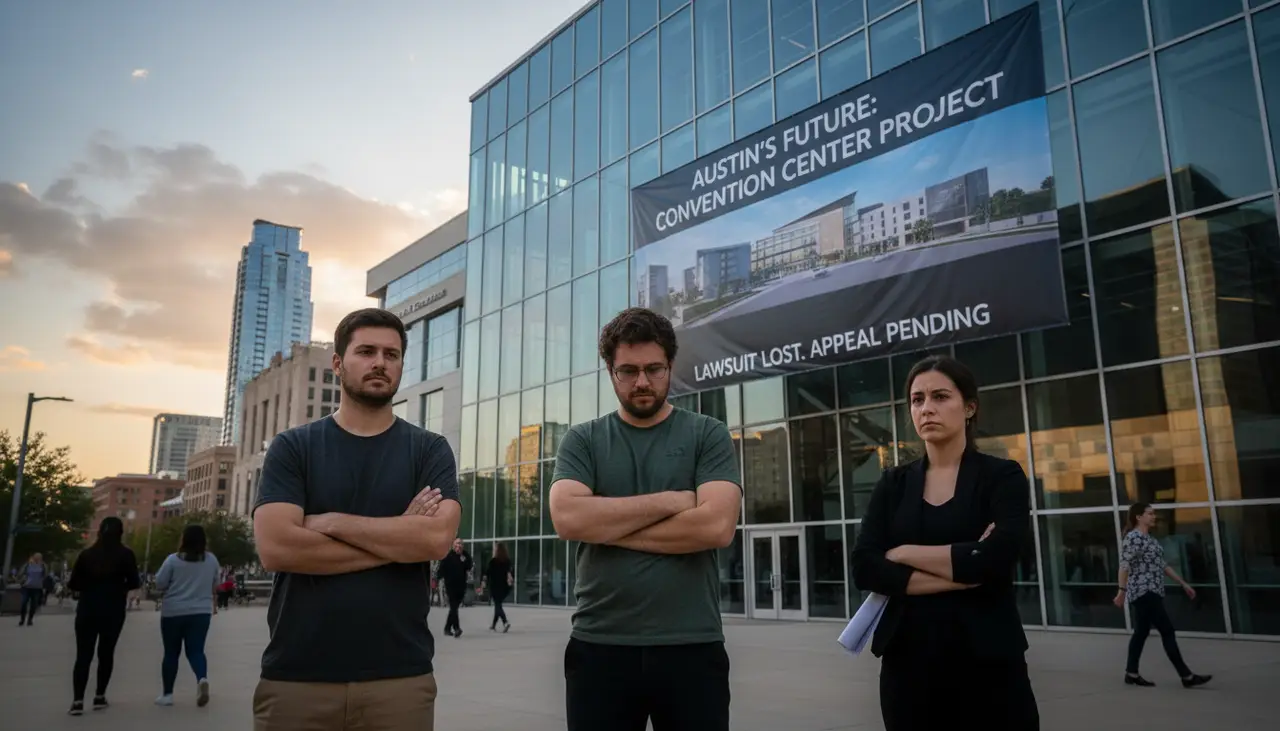
Concrete Barriers and Heavy Machinery at 4th and Red River as Convention Center Construction Presses Ahead
Just after 7 a.m. Monday, the hum of bulldozers and the clank of steel beams filled the air near the intersection of East 4th Street and Red River Street in downtown Austin’s Rainey Street neighborhood. Construction crews moved steadily across the sprawling six-block site where the former Austin Convention Center once stood, now a vast construction zone barricaded by concrete barriers and chain-link fences. Despite the morning rush hour crowd, traffic slowed to a crawl as drivers navigated lane closures and detours, a daily reminder that the city’s massive $1.6 billion convention center expansion is no longer a plan on paper—it’s a reality under construction.
Judge Clears Path for Convention Center Expansion; Opponents Weigh Next Moves
Last weekend, a Travis County judge ruled that the City of Austin acted lawfully in rejecting nearly 500 petition signatures submitted by Austin United PAC, a group opposing the convention center project. The signatures, collected to force a citywide vote on the project’s future, fell short of the 20,000 required to qualify for the May ballot. The group argued that signatures from residents living in extraterritorial jurisdictions (ETJs)—areas just outside the official city limits—should have been counted, a claim the judge did not uphold.
With demolition of the old convention center having begun in May 2025, the site at East 4th Street between Red River and Trinity Street is now a hive of activity. Mayor Kirk Watson’s office released a statement calling the ruling “a good win for Austinites,” emphasizing the project’s role in bolstering the city’s tourism economy. Meanwhile, Austin United PAC’s lawyer, Bill Bunch, has indicated the group is considering an appeal focused on the signature count and is watching a narrow window for a possible court-ordered May election. If that fails, a November ballot or a new petition drive could follow.
Why This Matters for Austin Residents
The stakes of this project go beyond city hall debates. The construction site covers a massive footprint in downtown Austin, affecting neighborhoods like Rainey Street and the nearby East Cesar Chavez area. Residents and commuters face daily disruptions from increased traffic congestion, lane closures on streets like East 4th and Trinity, and the noise and dust that come with a project of this scale.
For local businesses, especially those relying on foot traffic along Red River and East 6th Street, the prolonged construction threatens revenue as pedestrian access becomes more complicated. Homeowners and renters in the East Austin neighborhoods adjacent to the site may face increased stress from noise pollution and longer commute times as traffic reroutes around the construction zone.
Financially, the project’s $1.6 billion price tag, funded through hotel occupancy taxes and convention center revenue, could ripple into higher costs for visitors and residents alike. Opponents warn the long-term price, including interest and operating losses over 30 years, could balloon to $5.6 billion—potentially straining city budgets and impacting funding for other local services.
If You Are Affected: What You Need to Do Now
- Track construction updates daily via the City of Austin’s official project website and local news outlets to understand changes in traffic patterns.
- Plan alternate routes for your commute, especially around East 4th Street, Red River, Trinity, and Cesar Chavez streets, to avoid unexpected delays.
- If you live or work near the construction zone, expect increased noise and vibrations—prepare your household by securing windows and minimizing outdoor activities during peak construction hours.
- For business owners: communicate with customers about access changes and consider adjusting hours or delivery schedules to work around construction disruptions.
- Keep documentation of any property damage or disturbances caused by construction activities, including photos and written records.
- If you signed the petition or are concerned about your voting rights related to this project, monitor local election board announcements closely for any updates on ballot measures.
- Contact your neighborhood association or local representatives to express concerns and stay informed about community meetings or forums.
When Professional Help Becomes Necessary
The scale and complexity of this project mean that some issues require expert intervention beyond what residents can manage alone.
- Legal Assistance: If you believe your rights as a voter or resident are being infringed—especially regarding petition signature disputes or election processes—you need to contact an attorney experienced in local government and election law immediately. Time is critical to meet appeal deadlines.
- Contractors and Planners: Property owners near the construction site who notice structural damage or require guidance on mitigating noise and dust impact should consult licensed contractors and urban planners familiar with large-scale construction in dense urban areas.
- Repair Services: Residents experiencing damage to homes or businesses from construction vibrations or traffic detours must engage professional repair services promptly to document and fix issues before they worsen, ensuring proper insurance claims or city compensation if applicable.
What This Means for Austin’s Daily Life
The new convention center project is transforming a central piece of downtown Austin, an area many residents pass through daily. Whether you work in the nearby Texas State Capitol complex, attend events at the Austin Convention Center’s temporary locations, or live in the East Cesar Chavez or Rainey Street neighborhoods, the changes here will affect your commute, your local economy, and your community’s character for years.
As construction continues, so too does the legal battle over the project’s future. The next few days are critical for residents who want a say in the process. Ignoring deadlines or failing to act could mean losing the chance to influence a development that will shape Austin’s downtown for decades.
Where This Is Happening in Austin
The construction site spans six city blocks in the heart of downtown Austin, bordered roughly by East 4th Street to the north, Trinity Street to the west, East Cesar Chavez Street to the south, and Red River Street to the east. This area lies within the Rainey Street and East Cesar Chavez neighborhoods, both known for their mix of residential and commercial spaces.
Nearby landmarks include the former Austin Convention Center location and the Austin Central Library a few blocks northwest. Locals traveling to work, entertainment venues, or city offices often use East 4th, Red River, and Trinity streets, all of which are currently impacted by construction-related closures and detours.