Late Afternoon Congestion at Lamar Boulevard and 45th Street: A Sign of Bigger Changes Ahead
It’s 5:30 p.m. on a Tuesday in the North Loop neighborhood. Drivers inch forward on Lamar Boulevard, caught in the familiar rush hour crawl near the intersection with 45th Street. Cyclists weave cautiously between cars, and pedestrians wait impatiently at the curb for the walk signal to cross. The familiar hum of traffic masks a growing tension: upcoming changes along Austin’s state highways that could disrupt this daily flow for months to come.
New Agreement Between Austin and TxDOT Changes How City Roads Are Maintained
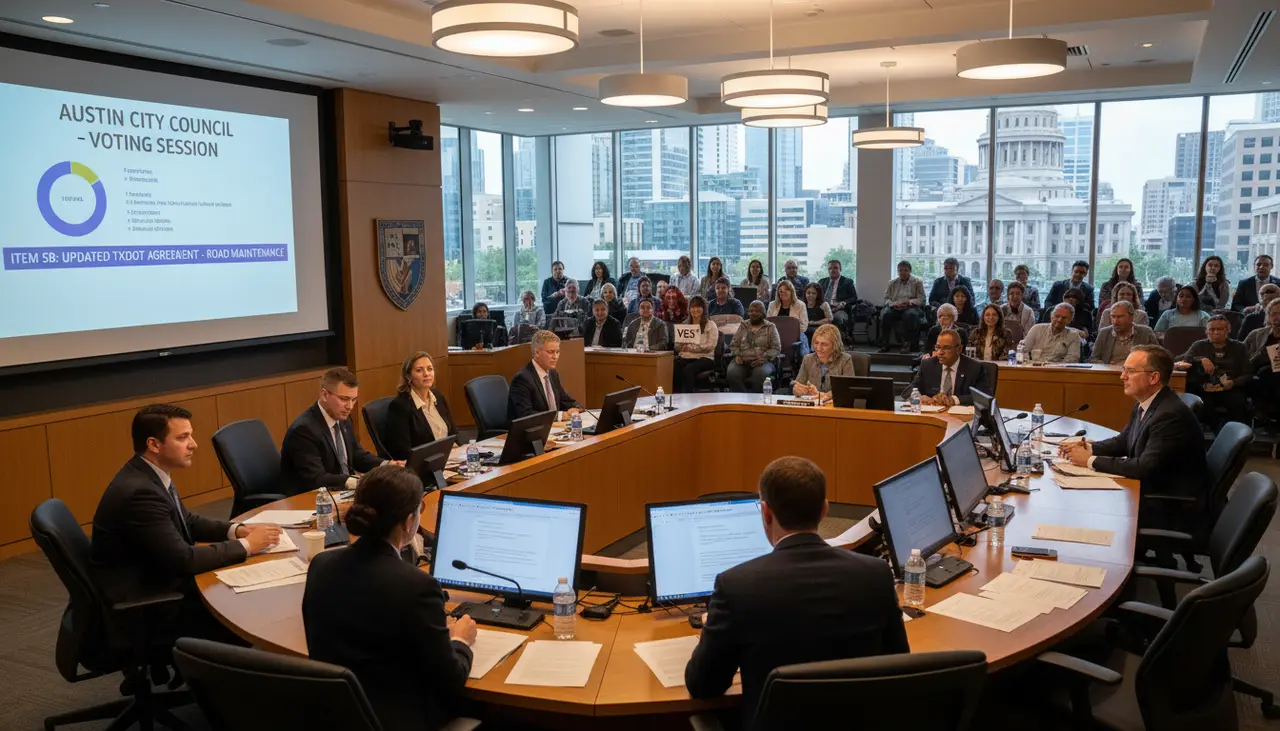
On February 5, the Austin City Council approved a new Municipal Maintenance Agreement (MMA) with the Texas Department of Transportation (TxDOT) that updates the management of state highways within city limits. This agreement replaces the original 1986 version, reflecting decades of changes in road conditions, regulations, and infrastructure.
The agreement governs maintenance responsibilities on both controlled access highways—like I-35, MoPac (Loop 1), and US 183—and noncontrolled access roads such as Menchaca Road, Bee Caves Road, Loop 360, FM 969, and RM 620. It covers a wide range of upkeep tasks including resurfacing, preventive maintenance, roadside landscaping, litter removal, signal and street lighting service, pedestrian sidewalks, and drainage facilities.
According to Richard Mendoza, Austin’s Transportation Director, the new 2026 MMA clarifies who handles what, especially when it comes to pedestrian infrastructure under the Americans with Disabilities Act (ADA), signage, traffic signals, and pavement markings. While the state continues to maintain travel lanes and shoulders on controlled access highways, the city now has clearer responsibilities for pedestrian and bicycle assets, traffic signals, and enforcement of local ordinances such as public camping bans and parking rules.
Why This Matters: What Austin Residents Need to Know
If you live, work, or commute through neighborhoods like North Loop, West Lake Hills, or near landmarks such as the University of Texas at Austin, these changes will affect your daily life. Here’s why:
- Safety Risks Increase Without Clear Maintenance: Miscommunication or delays in upkeep of sidewalks, signals, or drainage can lead to accidents. Imagine a broken streetlight on Bee Caves Road or a damaged crosswalk near Lamar Boulevard during rush hour. Pedestrians and cyclists could face serious hazards.
- Traffic Congestion and Delays: Maintenance responsibilities split between city and state mean coordination is crucial. Any gaps could result in slower response times for repairs or resurfacing, causing longer commutes on already busy arteries like I-35 or MoPac.
- Financial Burdens and Stress for Residents: Deferred maintenance can lead to costly repairs down the line, potentially impacting city budgets and local taxes. Additionally, parking enforcement and public camping regulations, now more clearly assigned to the city, could affect neighborhood dynamics, especially in areas like Hyde Park or Clarksville.
Ignoring these changes or delays in response could leave your household vulnerable to property damage, longer travel times, or unsafe walking routes. Austin’s rapid growth means every day counts to keep infrastructure functioning smoothly.
If This Affects You: What To Do First
If you notice maintenance issues or disruptions in your neighborhood or on your commute, follow these steps immediately:
- Document the problem with photos and notes—include dates, times, and exact locations (e.g., “Sidewalk crack at the NE corner of Lamar and 45th”).
- Report the issue to Austin 311 or TxDOT’s local office depending on the road type (controlled vs. noncontrolled access).
- Check online for updates on roadwork or maintenance schedules affecting your area.
- Notify your neighborhood association or local council member to escalate urgent issues.
- Adjust your travel plans to avoid known maintenance zones during peak hours.
- Stay alert for changes in traffic signals, pedestrian crossings, or parking rules in your area.
- Keep emergency contact numbers handy in case of accidents or sudden road hazards.
When Professional Help Becomes Necessary
Some situations require more than just reporting or personal caution. You need to contact professionals if you encounter any of the following:
- Legal Assistance: If you suffer property damage or injury due to poor maintenance on city or state roads—such as a fall on a broken sidewalk or a car accident caused by potholes—you need a lawyer to explore claims against the responsible agency.
- Contractors and Repair Services: Homeowners near these state highways might face drainage or landscaping issues spilling onto private property. In such cases, professional contractors can assess and fix damage caused by inadequate roadside maintenance.
- Traffic Planners or Community Advocates: If you’re part of a neighborhood association or business district affected by changes to parking enforcement or traffic signals, consulting with urban planners or transportation experts can help you navigate and influence future decisions.
DIY fixes won’t work for structural road problems, signal malfunctions, or legal disputes. Acting quickly to involve the right experts can prevent bigger headaches.
What This Means for Austin’s Future
As Austin undergoes the multibillion-dollar expansion and reconstruction of I-35—a project that will reshape the city’s transportation landscape—this new MMA sets the groundwork for clearer maintenance responsibilities. Residents living near the highway, especially in East Austin and the Central Eastside, should anticipate future construction-related disruptions and ongoing maintenance coordination.
The city also plans “caps and stitches” to reconnect neighborhoods divided by the highway expansion. A separate MMA will address upkeep of these new structures, representing another layer of complexity for residents and city officials alike.
Whether you drive down Loop 360 through West Lake Hills, bike along Menchaca Road in South Austin, or walk near the University of Texas campus, these maintenance agreements impact your safety and convenience. Staying informed and proactive is essential as Austin’s infrastructure evolves.
Where This Is Happening in Austin
The new Municipal Maintenance Agreement covers a broad swath of Austin, including key corridors like I-35 running through East Austin and the Central Business District, MoPac (Loop 1) skirting West Austin and neighborhoods like Tarrytown, and US 183 cutting across North Austin near the Domain.
Noncontrolled access highways affected include Menchaca Road running through South Austin neighborhoods such as Zilker and Barton Hills, Bee Caves Road connecting West Austin and Rollingwood, Loop 360 winding through West Lake Hills, FM 969 near East Austin’s Windsor Park, and RM 620 in Northwest Austin.
Residents near major intersections like Lamar Boulevard and 45th Street in North Loop, or near landmarks such as the University of Texas at Austin and the Austin Community College campus, will especially feel the impact. These roads are vital arteries for daily commutes, school runs, and local commerce.
Understanding who maintains what, and when, can help you navigate disruptions and hold the right agencies accountable for keeping Austin moving safely and efficiently.