Late Tuesday Evening at Riverside Drive and Pleasant Valley Road: A City on Edge
It’s just after 7 p.m. on a humid spring evening in East Riverside-Oltorf, and traffic crawls past the construction fencing that now surrounds the gutted Austin Convention Center site. Workers have left for the day, but the hum of debate still buzzes in the air. Nearby, residents from South Congress and East Riverside neighborhoods scroll through news updates on their phones, eyes fixed on the latest court filings. The intersection of Riverside Drive and Pleasant Valley Road has become more than just a busy commute route — it’s ground zero for a legal battle that could reshape Austin’s future.
What Just Happened: Legal Fight Over Convention Center Expansion Reaches Texas Supreme Court
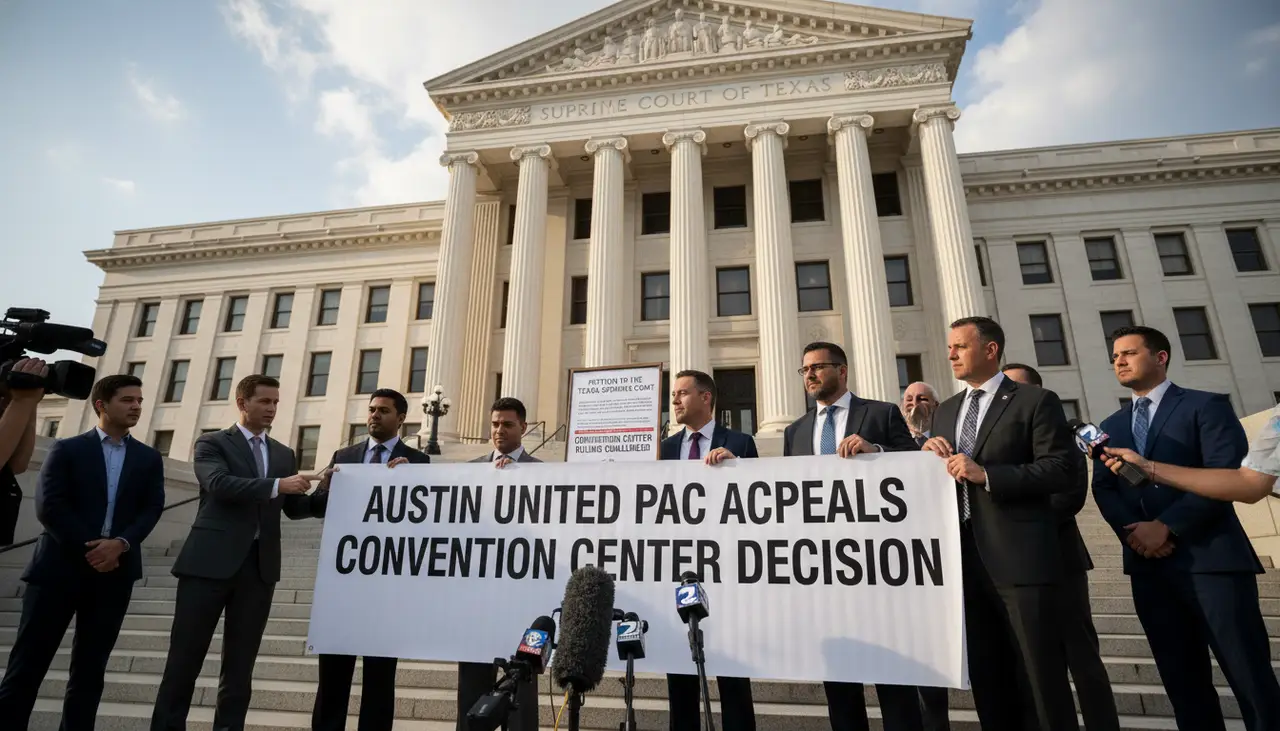
On Tuesday, the Austin United Political Action Committee (PAC) filed an emergency appeal with the Texas Supreme Court, challenging a recent Travis County district judge’s ruling that sided with the city. The case centers on whether voters should have a direct say in the $1.6 billion Austin Convention Center expansion project currently underway.
The PAC’s petition, submitted last October with over 20,000 signatures, sought to force a public vote on the project. But Austin City Clerk Erika Brady rejected the petition, citing insufficient valid signatures. The PAC contends Brady wrongly disqualified hundreds of signatures from residents living in the city’s extraterritorial and limited purpose jurisdictions — areas just outside city limits but still impacted by city policies.
The lawsuit, filed in December and argued over two days last month by attorneys Bill Bunch and Bobby Levinski, focuses on whether these suburban voters have the legal right to participate in this election. State law restricts voting rights in certain city elections for these areas, and the city maintains the convention center ballot does not qualify.
The Texas Supreme Court now faces a critical deadline: Friday is the last day to call for an election in May. If the court declines to expedite the appeal, the earliest voters might weigh in would be November. Meanwhile, construction on the convention center, located at the intersection of Red River Street and Cesar Chavez Street in downtown Austin, continues, with demolition complete and a reopening planned for Spring 2029.
Why This Matters to You and Your Neighborhood
This legal tug-of-war isn’t just about signatures and statutes — it directly affects your household, your commute, and your city’s future.
- Traffic and Commutes: The expansion will bring increased construction traffic around downtown, particularly near intersections like Red River and Cesar Chavez, and along Riverside Drive. Expect longer delays and detours for months or years. If the appeal drags on, prolonged construction could exacerbate congestion in neighborhoods like East Riverside and South Congress.
- Housing and Development Pressure: The convention center’s expansion fuels demand for nearby hotels and short-term rentals, pushing housing prices higher in adjacent neighborhoods such as Bouldin Creek and Travis Heights. If voters reject the project, it could slow this pressure, but ongoing construction might still impact these communities.
- City Budget and Taxes: The $1.6 billion price tag is funded largely through hotel occupancy taxes. If the PAC’s petition succeeds, residents in the extraterritorial areas — including parts of Manor and Pflugerville that currently pay these taxes — could influence how their money is spent. If not, those voters lose that voice, potentially increasing financial strain on households in these expanding suburbs.
- Community Safety and Noise: Construction noise and heavy equipment traffic will affect daily life for residents near the project site and along key corridors like Pleasant Valley Road and Riverside Drive. If this legal battle delays the project, construction impacts could drag on, increasing stress and disrupting routines.
If You Are Affected: What You Must Do Immediately
If you live, work, or commute through the affected areas, you need to act decisively to protect your interests.
- Stay Informed: Follow updates from the Texas Supreme Court and Travis County on the appeal status. Check official Austin city communications regularly.
- Verify Your Voter Status: Confirm if you live within the city limits, extraterritorial jurisdiction, or limited purpose jurisdiction. This determines your voting rights on the issue.
- Prepare for Traffic Changes: Plan alternative routes around Riverside Drive, Pleasant Valley Road, and downtown intersections to avoid delays during ongoing construction phases.
- Document Construction Impacts: Keep records of noise disturbances, traffic delays, or property damage related to the project. This documentation will be crucial if you seek compensation or legal action later.
- Engage with Neighborhood Associations: Groups in East Riverside, South Congress, and Bouldin Creek are organizing information sessions and community responses. Join these efforts to amplify your voice.
- Consider Your Housing Plans: If you’re planning to buy, sell, or rent near the construction zones, consult with real estate professionals about potential market fluctuations due to the project.
- Prepare to Vote: Depending on the court’s decision, an election could be called as soon as May or delayed until November. Know your polling location and voting options now.
When Professional Help Becomes Necessary
This situation involves complex legal, logistical, and personal challenges. Know when to seek expert assistance:
- Legal Help: If you believe your voting rights in the extraterritorial or limited purpose jurisdictions are being ignored, or if you want to challenge or support the ballot measure, you need to contact an attorney experienced in election law and municipal governance immediately.
- Contractors and Planners: Homeowners and businesses near the construction zone should hire licensed contractors and city planners to assess potential property impacts and advise on mitigating construction-related damages or disruptions.
- Repair Services: Construction activity can cause unexpected damage to nearby properties. If you experience structural issues, noise violations, or other disturbances, contact local repair services promptly to document and address the problems.
Back to Austin: What This Means for Your Daily Life
Whether you live in Travis Heights, commute through East Riverside, or work downtown near the Austin Convention Center, this legal battle affects your day-to-day reality. The intersection of Riverside Drive and Pleasant Valley Road is a vital artery for thousands of Austinites. The outcome will influence traffic patterns, city budgets, and your neighborhood’s future development.
Ignoring this dispute risks prolonged construction chaos, lost voting rights, and increased financial burdens on your household. The clock is ticking — Friday’s deadline looms large, and the Texas Supreme Court’s decision will ripple across Austin’s communities.
Where This Is Happening in Austin
The Austin Convention Center sits at the heart of downtown, bordered by Red River Street to the east and Cesar Chavez Street to the south. Construction impacts ripple outward to neighborhoods including East Riverside, South Congress, Bouldin Creek, and Travis Heights.
Nearby major roads like Riverside Drive and Pleasant Valley Road funnel thousands of commuters daily, connecting residential areas with downtown workplaces and cultural landmarks such as the Austin Convention Center and the Palmer Events Center. Residents from extraterritorial jurisdictions in Manor and Pflugerville also pay hotel taxes funding the project, though their voting rights remain contested.
For many Austinites, these streets and neighborhoods are part of daily life — whether dropping kids at school, heading to work, or enjoying a night out. The legal and construction battles unfolding here will affect traffic, housing, and city services for years to come.