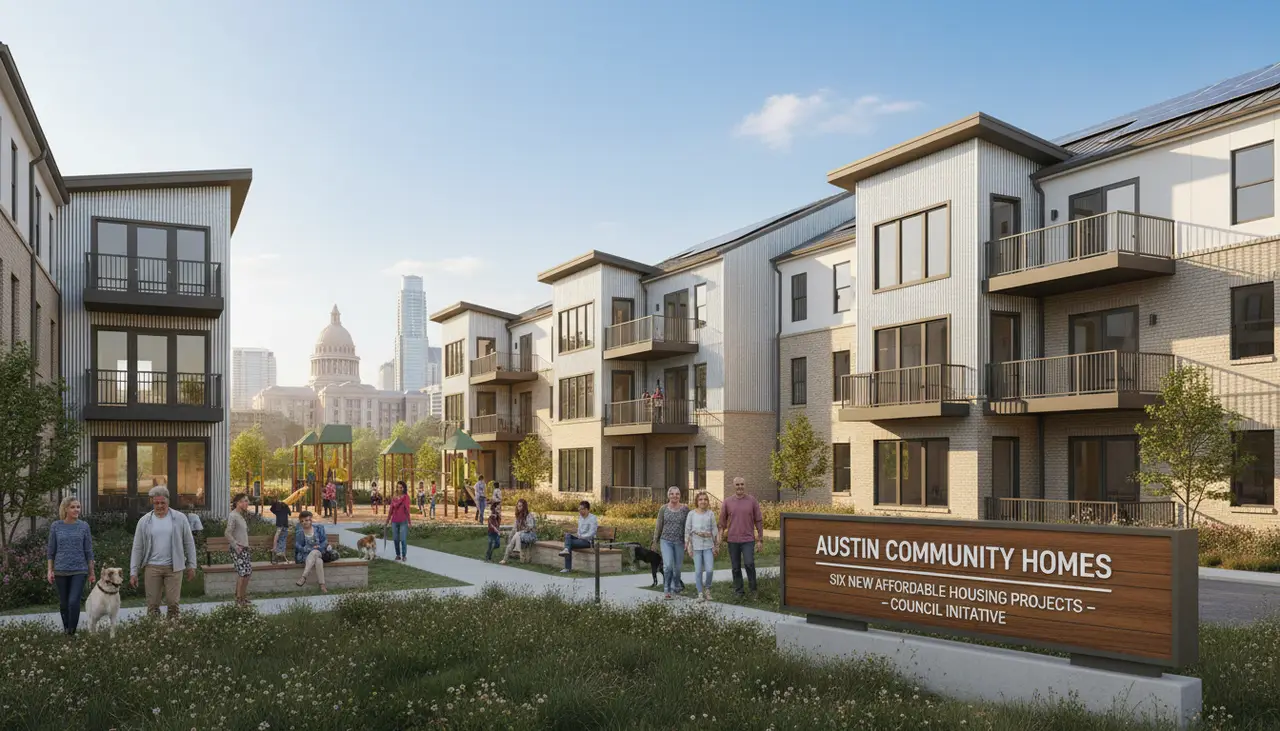
Evening at Manor Road and Airport Boulevard: A Turning Point for Austin’s Housing Crisis
It was just after 6 p.m. on Thursday when the Austin City Council chamber buzzed with quiet urgency. Outside, the intersection of Manor Road and Airport Boulevard in Northeast Austin thrummed with rush hour traffic—commuters rushing home, families navigating crowded sidewalks, and residents eyeing the aging apartment complexes nearby. For many, the promise of affordable housing felt distant. But inside the council chambers, a critical decision was made that could reshape neighborhoods like this one, and others across the city.
Council Approves Support for Six Affordable Housing Developments
On Thursday, the Austin City Council unanimously approved resolutions backing six affordable housing developments seeking 9% low-income housing tax credits from the Texas Department of Housing and Community Affairs. This endorsement is a crucial step for projects spread across Mueller, North Austin, Northeast Austin, East Austin, and South Austin.
Each resolution grants the highest level of local government support, a factor that significantly increases the projects’ chances of receiving competitive state tax credits. The developments are strategically located within walking distance of existing transit routes and the first phase of Project Connect, Austin’s landmark transit expansion effort.
The council’s resolutions confirm that Austin surpasses the state average for housing units financed through tax credits or private activity bonds per capita. They also acknowledge that each proposed development lies within one mile of a similar affordable housing project funded in the past three years, signaling a deliberate effort to concentrate affordable housing near transit and other amenities.
Why This Matters to You and Your Neighborhood
If you live near Manor Road in Northeast Austin, Guadalupe Street in Mueller, or South Congress Avenue in South Austin, these developments could directly affect your daily life—and not always for the better if you’re unprepared.
Affordable housing near major transit corridors aims to ease Austin’s notoriously long commutes and reduce traffic congestion. But the influx of new residents can strain existing infrastructure, increase demand on local roads, and impact neighborhood safety if traffic patterns aren’t properly managed. Without adequate planning, you could face longer wait times at intersections like Airport Boulevard and Manor Road, or see parking become scarce on streets like East 11th Street in East Austin.
For renters and homeowners alike, the council’s support signals a shift toward denser housing options. This could mean more affordable units for families struggling with Austin’s rising rents, but also rapid changes in neighborhood character. If you’re a homeowner near these developments, property values and local services could fluctuate unpredictably.
Stress and uncertainty are inevitable when large projects move into your area. Construction noise, dust, and potential delays can disrupt your routine. And if you’re a tenant, you need to be vigilant about your lease terms and rights as new developments reshape your housing market.
If This Affects You: What to Do First
- Identify if your home or rental is within one mile of any new affordable housing development, especially near intersections like Manor Road & Airport Boulevard or Mueller Boulevard & Berkman Drive.
- Monitor local city council announcements and public meetings about construction timelines and zoning changes. Missing these updates could leave you blindsided by sudden disruptions.
- Document your current living conditions and any communications with landlords or city officials. This record will be vital if disputes arise.
- Prepare for increased traffic by exploring alternate routes ahead of construction phases, particularly if you commute via East 11th Street or South Congress Avenue.
- Review your lease or mortgage documents to understand your rights if construction impacts your home’s livability or value.
- Stay in contact with neighborhood associations or local advocacy groups to voice concerns or get updates on project progress.
- Plan for potential noise and safety hazards around construction sites—keep children and pets away, and be alert to changes in pedestrian pathways.
When Professional Help Becomes Necessary
If you encounter legal disputes with landlords over rent increases or maintenance issues tied to the new developments, you need to contact a housing or tenant-rights lawyer immediately. Ignoring these problems risks eviction or loss of affordable housing options.
Construction often reveals hidden issues in older buildings nearby—like plumbing failures, electrical hazards, or structural damage. If you notice leaks, power outages, or cracks in your walls, professional contractors or licensed repair services must be called without delay. Delaying repairs can escalate costs and jeopardize your safety.
For homeowners concerned about zoning changes or the impact on property values, consulting with urban planners or real estate experts is critical. These professionals can guide you through appeals or neighborhood planning processes to protect your interests.
Back to Austin: What This Means for Our City
Austin’s affordable housing crisis is no secret. The council’s resolutions show a city attempting to balance growth with equity, but the stakes are high. Residents near Mueller’s bustling streets, North Austin’s industrial corridors, or South Austin’s vibrant communities will see the immediate effects. Whether you drive down Airport Boulevard, bike along East 11th Street, or walk near the Texas State Capitol, these developments will shape the cityscape and your daily experience.
Ignoring these changes isn’t an option. The time to act is now—before construction begins and before the ripple effects reach your doorstep.
Where This Is Happening in Austin
The six affordable housing projects supported by the council are located in key areas:
- Mueller Neighborhood: Around Berkman Drive and Mueller Boulevard, near the former airport site turned mixed-use community, with residents regularly using the nearby transit stops and trails.
- North Austin: Close to intersections like Rundberg Lane and Lamar Boulevard, where commuters face heavy congestion daily.
- Northeast Austin: Near Manor Road and Airport Boulevard, a major artery connecting downtown to the airport and suburbs.
- East Austin: Along East 11th Street, close to the Texas State Capitol and multiple bus routes, an area experiencing rapid redevelopment.
- South Austin: Around South Congress Avenue, a corridor known for its mix of residential and commercial spaces, popular with locals and tourists alike.
These neighborhoods are interconnected by Austin’s growing transit network, including the first phase of Project Connect, which aims to improve mobility but also bring construction challenges and increased density. Locals pass through these corridors daily—whether commuting to work, school, or errands—which means the impact of these developments will be felt citywide.