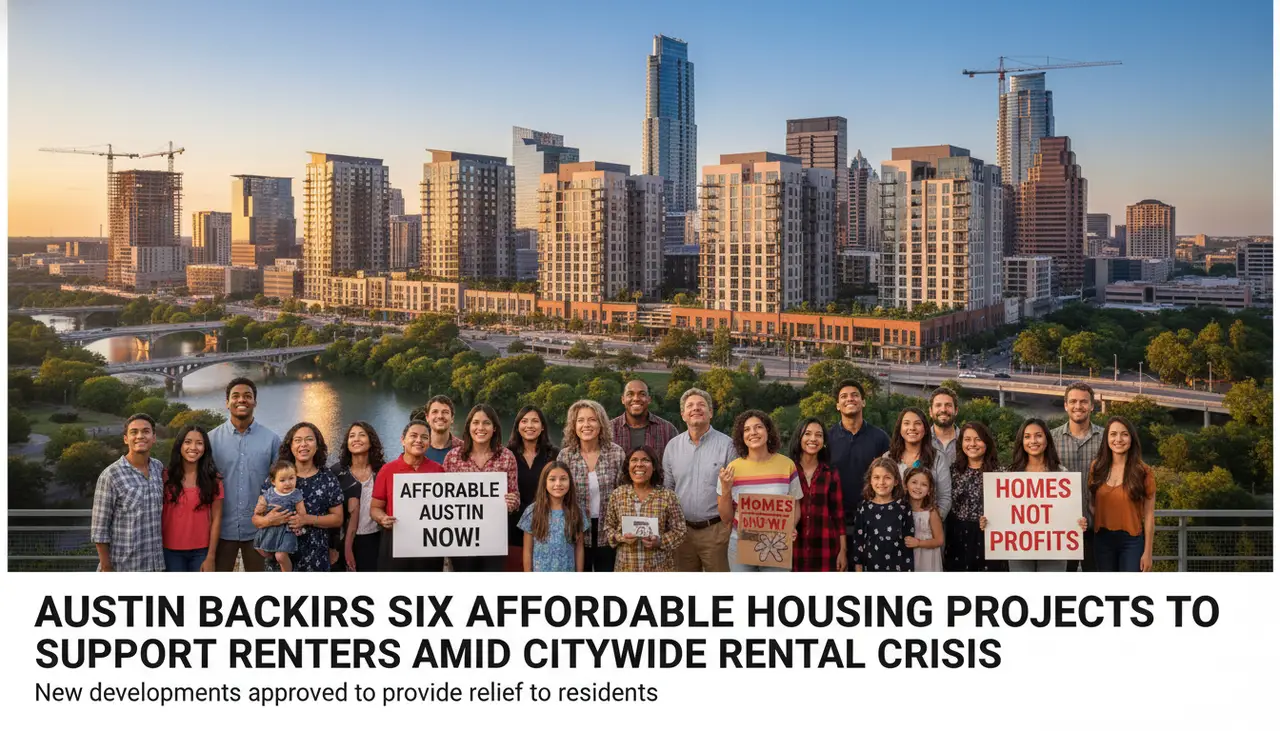
Evening Commute Near South Congress and Annie Street Brings New Affordable Housing Debate Into Focus
It’s just past 6 p.m. on a Thursday, and the intersection of South Congress Avenue and East Annie Street in Austin’s South Congress neighborhood is buzzing with traffic. Cars inch forward as pedestrians cross busy streets, many looking toward the shops and restaurants lining the corridor. Nearby, residents like Martha Newman watch anxiously from their porches, aware that a proposed affordable housing development just around the corner on Nickerson Street could change the rhythm of their daily lives.
On the opposite side of town, near Philomena Street in the Mueller neighborhood, construction crews are already surveying the land for another project. Councilman Zo Qadri, whose district includes both areas, recently secured City Council support for six affordable housing developments applying for Low-Income Housing Tax Credits. Two of those developments—an 80-unit complex in Mueller and a 75-unit project near South Congress—are poised to reshape housing options for many Austinites.
What Happened: City Council Backs Six Affordable Housing Projects
On Thursday, Austin City Council passed a resolution supporting six applications for state Low-Income Housing Tax Credits. These tax credits are critical for financing affordable housing projects that must remain affordable for at least 30 years after opening.
The two highlighted sites are:
- Philomena Street in Mueller, where 80 new affordable units are planned just across from an existing complex.
- Nickerson Street near East Annie Street in South Congress, proposed for 75 units.
These locations were chosen for their proximity to job centers, public transit options like CapMetro, and future infrastructure developments. The South Congress site is particularly notable because it sits about half a mile from the planned Light Rail line, scheduled to begin service in 2033.
Residents like Chad Hicks, who rents a one-bedroom near Mueller for less than 25% of his income, emphasize how affordable housing close to work and transit is essential. Hicks, who doesn’t own a car, relies on this setup to avoid the cost and stress of commuting.
Why This Matters Locally: What Austinites Face If These Projects Move Forward
If you live or work near South Congress or Mueller, these developments will affect your daily routine, your commute, and possibly your neighborhood’s character. Martha Newman, a South Congress resident, voices concerns about increased traffic and parking shortages that could worsen if 75 new units bring more residents and vehicles to an already congested area.
Ignoring these issues could lead to longer traffic delays, higher stress levels, and safety risks for pedestrians and drivers alike. For renters and homeowners, the influx of new residents might strain local infrastructure if not properly managed.
On the flip side, without enough affordable housing options, more Austinites will face longer commutes, higher rent burdens, or displacement. The stakes are high: your household’s transportation costs, time spent in traffic, and even your neighborhood’s livability are on the line.
If This Happens to You: What You Need to Do Now
Whether you’re a resident worried about parking or a renter eyeing affordable units, here’s what you must do immediately:
- Stay informed. Follow City Council meetings and updates from the Austin Housing Department about these developments.
- Attend community meetings, especially those Councilman Zo Qadri plans in District 9, to voice your concerns or support.
- Document any changes in traffic patterns, parking availability, or neighborhood safety near your home.
- If you’re a renter interested in affordable housing, check your eligibility based on income and median family income (MFI) guidelines.
- Contact CapMetro or Austin Transportation Department for updates on transit options that might affect your commute.
- Prepare for possible disruptions during construction by planning alternate routes or adjusting schedules.
- Reach out to local neighborhood associations to stay connected and coordinated.
When Local Professional Help Becomes Necessary
At certain points, dealing with these developments will go beyond what you can handle alone. You need to contact professionals if any of the following apply:
- Legal Help: If you face eviction threats, disputes over rent or tenant rights related to redevelopment, or need to understand your housing rights under new affordable housing policies, seek a housing attorney immediately.
- Contractors and Repair Services: Construction nearby can cause property damage or require home repairs. If you notice issues like foundation cracks, water leaks, or structural problems, hire licensed contractors to assess and fix the damage promptly.
- Urban Planners and Community Advocates: If you want to influence development plans or address traffic and parking concerns, professional planners or local advocacy groups can help you navigate city processes and push for safer, more sustainable solutions.
Delaying professional assistance risks losing legal protections, worsening home damage, or missing critical opportunities to influence development outcomes.
Local Context: What This Means for Austin Residents
Whether you live near Mueller, South Congress, or commute through these corridors daily, these affordable housing projects will affect your neighborhood’s future. The Philomena Street site in Mueller sits near established affordable housing and job hubs, potentially easing rent burdens for workers like Chad Hicks.
Meanwhile, the South Congress site near Nickerson and Annie Streets is at the heart of a neighborhood already grappling with traffic and parking challenges. The half-mile walk to the upcoming Light Rail station offers hope for reduced car reliance but also demands careful planning to avoid gridlock and safety hazards.
These developments are not just distant proposals—they are on your streets, near your homes, and will impact your daily commute, housing options, and neighborhood dynamics for decades to come.
Where This Is Happening in Austin
The affordable housing projects are centered on two key areas:
- Mueller Neighborhood: Near Philomena Street, just east of Airport Boulevard and north of East 51st Street. This area is a growing mixed-use community with nearby parks, schools, and the Austin Community College campus.
- South Congress Neighborhood: Around the intersection of South Congress Avenue, Nickerson Street, and East Annie Street. This corridor is known for its vibrant retail, dining, and music venues, with landmarks like the Continental Club and close access to Lady Bird Lake.
Both neighborhoods are served by CapMetro bus routes, and South Congress, in particular, will connect to Austin’s future Light Rail line scheduled for 2033. Residents and commuters traveling along Airport Boulevard, East 51st Street, and South Congress Avenue will encounter these areas daily, making the developments impossible to ignore.