Early Evening Chaos on East Riverside Drive: Tesla Robotaxi Crashes Raise Alarm in South Austin
It was just after 6 p.m. on a busy weekday near the intersection of East Riverside Drive and South Congress Avenue, a crucial corridor for South Austin commuters and residents. Drivers slowed unexpectedly as a Tesla robotaxi-branded Model Y reversed awkwardly in a parking lot, narrowly missing a parked car. This incident was one of 14 crashes involving Tesla’s autonomous vehicles in Austin since their June 2025 launch, sparking growing concern among local drivers and pedestrians about the safety of these robotaxis navigating our streets.
What Happened: The Facts Behind the Crashes
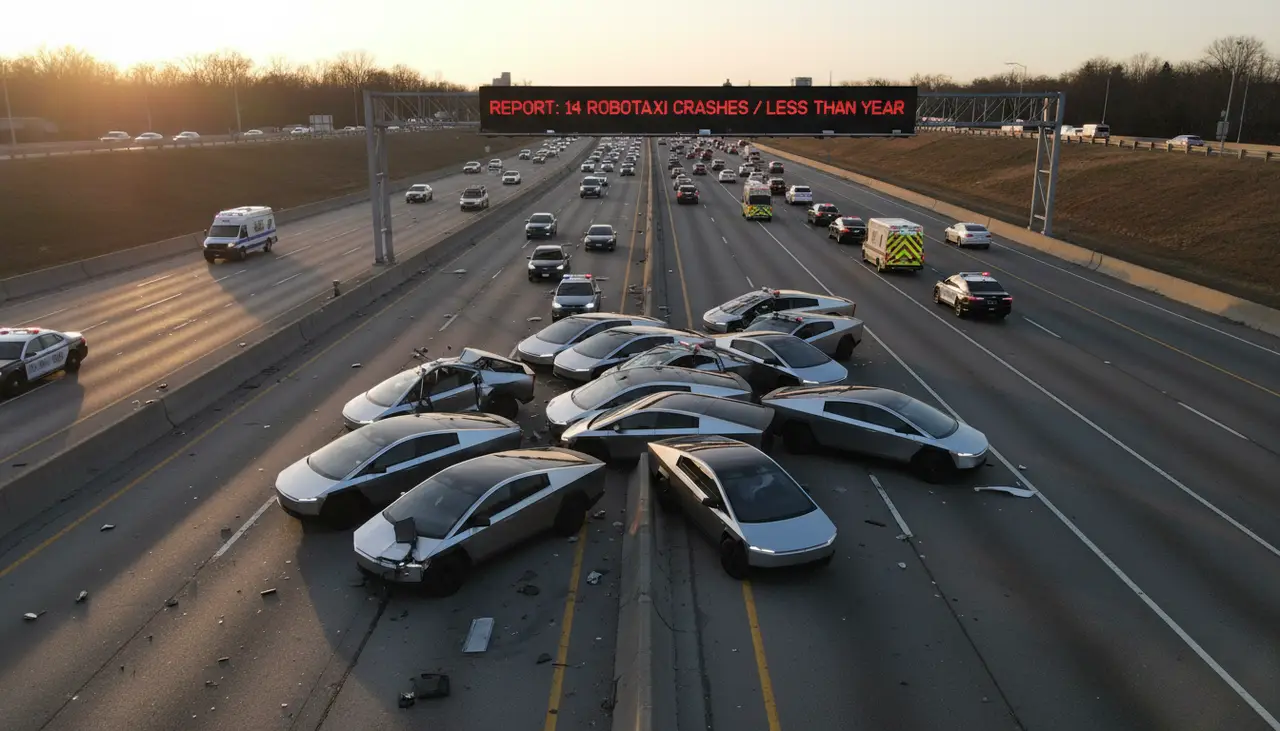
Tesla Inc. launched its robotaxi service in Austin in June 2025 with an initial fleet of 10 vehicles. Since then, the Austin Police Department has confirmed 14 crashes involving these robotaxis. The first reported crash occurred in July 2025 and was limited to property damage only. However, by December 2025, incident reports grew more serious, including minor injuries and at least one hospitalization.
Among the incidents, a notable crash happened in January involving a stopped Tesla robotaxi and a CapMetro bus, highlighting the risks of these vehicles interacting with public transit. Two other incidents involved the robotaxi backing into objects in parking lots, including a pole or tree and a heavy truck. The crashes are not limited to minor fender benders; some have caused injuries requiring medical attention.
Data shows Tesla’s robotaxis have a crash rate nine times higher than the average human driver in Austin. This stark statistic comes as Tesla’s fleet grows—currently reported at 40 human-monitored cars in Austin, with plans to expand to seven U.S. cities by mid-2026 and half the states by year-end.
For comparison, Waymo, a competitor operating 200 fully driverless vehicles, reported 51 collisions since mid-June. Waymo’s vehicles have faced scrutiny as well, including a recall of 3,000 cars last year after failing to stop for school buses. One incident in Santa Monica involved a Waymo car hitting a child, who suffered minor injuries. While Waymo’s fleet has driven approximately 127 million miles through September, Tesla’s robotaxis have logged over 600,000 paid miles through December in Austin alone.
Why This Matters to Austin Residents
If you live, work, or commute in South Austin, these robotaxi crashes are not just statistics—they represent a real threat to your safety and daily life. East Riverside Drive is a heavily trafficked route connecting residential neighborhoods, business districts, and cultural hubs. A collision involving a robotaxi here can cause traffic backups, delays for public transit users, and increased risk of injury for pedestrians and cyclists.
For households, the consequences can be severe. A crash could mean costly car repairs, medical bills for injuries, and time lost navigating insurance claims or legal disputes. The unpredictability of robotaxi behavior—such as backing into objects or failing to respond correctly to traffic signals—adds stress and uncertainty to already congested roads.
Emergency responders and local authorities are stretched thin managing these incidents, which could slow response times to other emergencies. There is also a growing concern for public transit safety, especially after the January crash involving a Tesla robotaxi and a CapMetro bus. This could disrupt bus schedules and increase commute times for many Austinites.
If You Are Involved in a Tesla Robotaxi Incident: What to Do Immediately
- Stop your vehicle safely and turn on hazard lights to alert other drivers.
- Check yourself and passengers for injuries. Call 911 immediately if anyone is hurt.
- Do not move vehicles unless directed by police or if they pose a hazard to traffic.
- Document the scene thoroughly: take photos of all vehicles, damages, street signs, and the surrounding area.
- Exchange contact and insurance information with the Tesla robotaxi operator or company representative, if available.
- Request a copy of the police report and note the officer’s name and badge number.
- Contact your insurance company to report the incident as soon as possible.
When Professional Help Becomes Necessary
After the initial steps, professional assistance becomes crucial. If your vehicle sustains damage, you need to contact reputable auto repair services immediately to assess and fix the issues. Delaying repairs can worsen damage and increase costs.
If you or a family member suffers injuries, even minor ones, you must seek medical evaluation and keep detailed records. Some injuries may not be immediately apparent but can have long-term effects.
Legal help is essential when dealing with robotaxi crashes. Tesla’s autonomous vehicles operate under complex liability frameworks. You need to contact an experienced personal injury attorney to protect your rights and navigate claims against Tesla or other responsible parties. Don’t wait—delaying legal consultation can jeopardize your case.
For property damage beyond vehicles, such as damage to private property or public infrastructure, contacting contractors or planners might be necessary. These professionals can help assess structural damage and coordinate repairs that comply with local codes, especially if the crash affects your home or business.
Austin’s Streets Are Changing—Residents Need to Stay Alert
As Tesla expands its robotaxi service, Austin residents will encounter these vehicles more frequently, especially on busy corridors like East Riverside Drive and near landmarks such as the Austin Central Library. The intersection of East Riverside Drive and South Congress Avenue is a daily passage for thousands, including commuters, students, and families.
Ignoring the risks posed by these autonomous vehicles is not an option. With 14 crashes in less than a year and a crash rate far exceeding human drivers, Austin’s streets demand vigilance. Your safety, your household’s well-being, and your property depend on it.
Where This Is Happening in Austin
The majority of Tesla’s robotaxi incidents have occurred along major thoroughfares like East Riverside Drive, a key artery connecting South Austin neighborhoods such as Travis Heights and Bouldin Creek. Nearby intersections, including South Congress Avenue, see heavy pedestrian and vehicle traffic, increasing potential for collisions.
Other reported incidents involve areas near the Austin Central Library and South First Street close to West Oltorf Street, both busy hubs for residents and visitors. These locations are common commute routes and popular destinations, meaning you or someone in your household could be directly affected.
With Tesla’s fleet expected to grow rapidly, these robotaxis will soon be a regular presence on Austin’s streets, from I-35 Frontage Road near East 51st Street to Airport Boulevard. Residents must prepare for increased interaction with autonomous vehicles and the challenges they bring.