Evening Commute Disrupted Near East Riverside Drive as Tesla Robotaxi Safety Monitor Intervenes
It was just after 6 p.m. on January 7 when drivers navigating East Riverside Drive in Austin’s bustling Riverside neighborhood found themselves slowed by an unusual scene. A Tesla robotaxi, part of the city’s expanding autonomous fleet, abruptly halted in traffic. A safety monitor inside the vehicle had to intervene. This moment, far from routine, highlights a growing concern for anyone sharing Austin’s roads with these semi-autonomous vehicles.
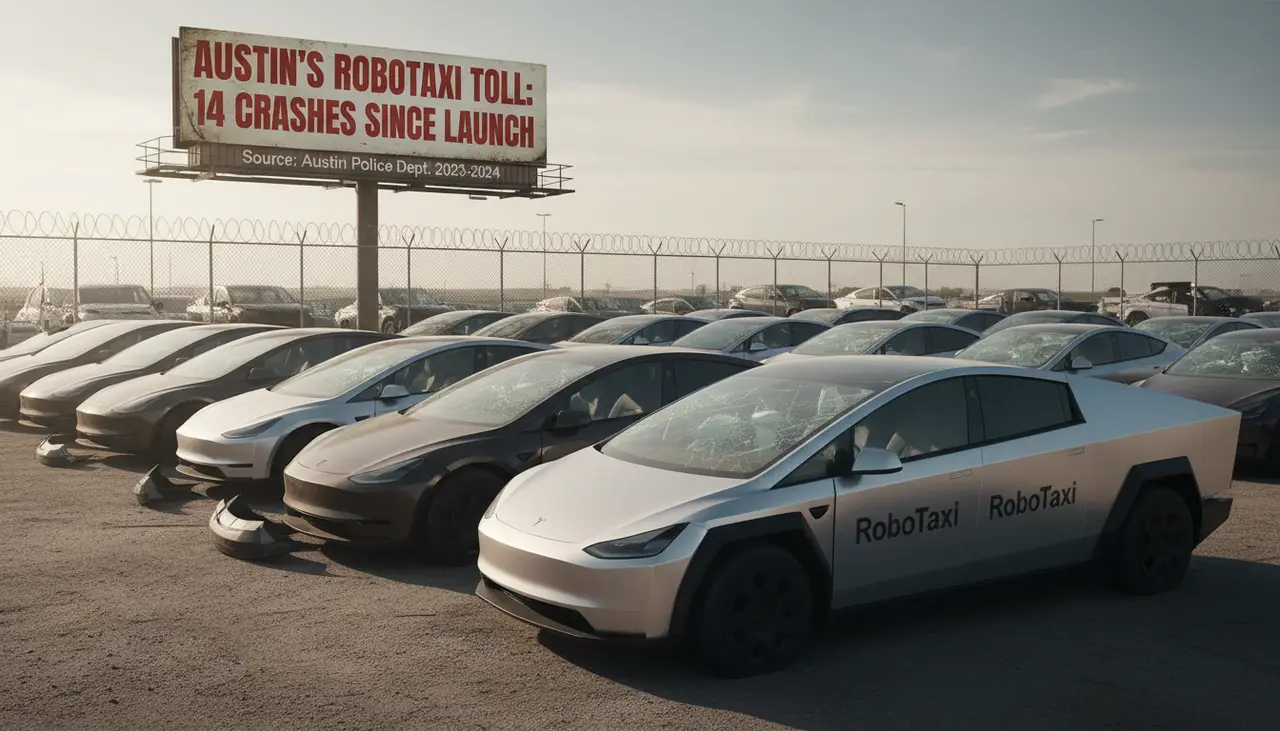
Fourteen Tesla Robotaxi Crashes Recorded in Austin Since June
Since Tesla launched its robotaxi service in Austin in June 2025, city officials and residents have tracked at least 14 crashes involving Tesla’s human-monitored autonomous vehicles. Five of these incidents occurred between December and mid-January, including the East Riverside Drive event. Thankfully, none of these recent crashes reported injuries, though property damage has been a consistent outcome.
In sharp contrast, Waymo, a competitor operating fully driverless cars in Austin, has reported 51 collisions since mid-June. Waymo’s fleet is much larger, with 200 fully driverless vehicles compared to Tesla’s 40 human-monitored cars. However, Waymo’s vehicles have logged 127 million miles through September, dwarfing Tesla’s reported 600,000 paid miles through December. Despite the higher crash count, Waymo’s incidents include minor injuries, such as a January 1 collision on South First Street near West Oltorf Street, where an SUV hit a stopped Waymo vehicle at a red light.
Among Tesla’s crashes, some involved severe errors like driving on the wrong side of the road and sudden braking. The National Highway Traffic Safety Administration (NHTSA) has launched investigations into these Tesla incidents, underscoring the seriousness of the situation.
Why This Matters to Austin Residents
Austin’s streets are already congested and unpredictable. The introduction of robotaxis adds a new layer of risk and uncertainty. Tesla’s 14 crashes since June are not just statistics—they represent real disruptions, potential injuries, and costly property damage that could directly affect your household.
Consider the stress and delay caused by a sudden robotaxi stop or crash during rush hour on East Riverside Drive or near landmarks like the Austin Central Library, where Tesla’s vehicles have been spotted. If a robotaxi brakes unexpectedly or makes a dangerous maneuver, it can trigger chain-reaction accidents, increasing traffic snarls and emergency response times in neighborhoods that rely heavily on these main arteries.
Moreover, with Tesla planning to expand robotaxi service to seven U.S. cities in the first half of 2026 and potentially half the country by year-end, Austin residents face a future where these vehicles will be more common. Without clear safety improvements, the risk of crashes and related costs—both financial and emotional—will rise.
If You Are Involved in a Robotaxi Incident: What to Do Immediately
- 1. Move to a safe location if possible without causing further risk to yourself or others.
- 2. Call 911 to report the accident, especially if there is property damage or injury.
- 3. Document the scene thoroughly—take photos of all vehicles, street signs, and any visible damage.
- 4. Exchange contact and insurance information with the robotaxi operator or safety monitor present.
- 5. Request a police report and obtain the responding officer’s name and badge number.
- 6. Contact your insurance company immediately to report the incident.
- 7. Keep detailed notes of all communications and expenses related to the crash.
When Professional Help Becomes Necessary
Not every robotaxi incident can be resolved through insurance claims or simple repairs. If you face significant vehicle damage, you need to contact qualified auto repair services immediately to avoid further mechanical issues or safety risks.
If the crash causes damage to your home or property, such as fences or landscaping, hiring licensed contractors is essential to ensure proper restoration and avoid future liabilities.
Legal assistance becomes crucial if you encounter disputes over fault, compensation, or injuries—even minor ones. Tesla’s incidents have involved sudden braking and wrong-way driving, scenarios that complicate liability. Don’t wait to consult a lawyer experienced with autonomous vehicle cases to protect your rights.
Lastly, if your daily routes are disrupted by robotaxi crashes or traffic slowdowns—especially near key Austin locations like the Central Library or East Riverside Drive—city planners and traffic management professionals may need to be involved. Residents should advocate for clearer regulations and safer integration of these vehicles into Austin’s traffic ecosystem.
Local Context: How These Crashes Affect Your Daily Life in Austin
Austin residents who commute along East Riverside Drive, South First Street near West Oltorf Street, the I-35 Frontage Road near East 51st Street, or Airport Boulevard have likely encountered Tesla or Waymo vehicles. These streets connect neighborhoods, business districts, and cultural landmarks, making them critical corridors for thousands of drivers daily.
When a Tesla robotaxi abruptly stops or crashes, it doesn’t just inconvenience one driver—it creates ripple effects through Austin’s already strained traffic system. Emergency response delays, insurance claims, and vehicle repairs can add weeks of stress and expense to your life.
With Tesla’s robotaxi service still new and under scrutiny, and Waymo’s larger but not incident-free fleet operating fully driverless cars, Austin drivers must remain vigilant. Understanding the risks and knowing how to respond can mitigate the impact on your household and keep you safer on Austin’s streets.
Where This Is Happening in Austin
The majority of Tesla’s robotaxi incidents have occurred along major Austin thoroughfares such as East Riverside Drive and near landmarks like the Austin Central Library downtown. Waymo’s collisions have been reported on South First Street near West Oltorf Street, the I-35 Frontage Road near East 51st Street, and Airport Boulevard.
These routes pass through busy neighborhoods and business districts, used daily by commuters, families, and visitors. East Riverside Drive connects the Riverside neighborhood to downtown, while South First Street is a key artery running through South Austin. The I-35 Frontage Road and Airport Boulevard serve as critical connectors for drivers heading to and from the airport and northern Austin.
Whether you live, work, or travel through these areas, the presence of semi-autonomous and fully driverless vehicles impacts your safety and commute. Stay alert, know your rights, and prepare for the growing presence of robotaxis on Austin’s streets.